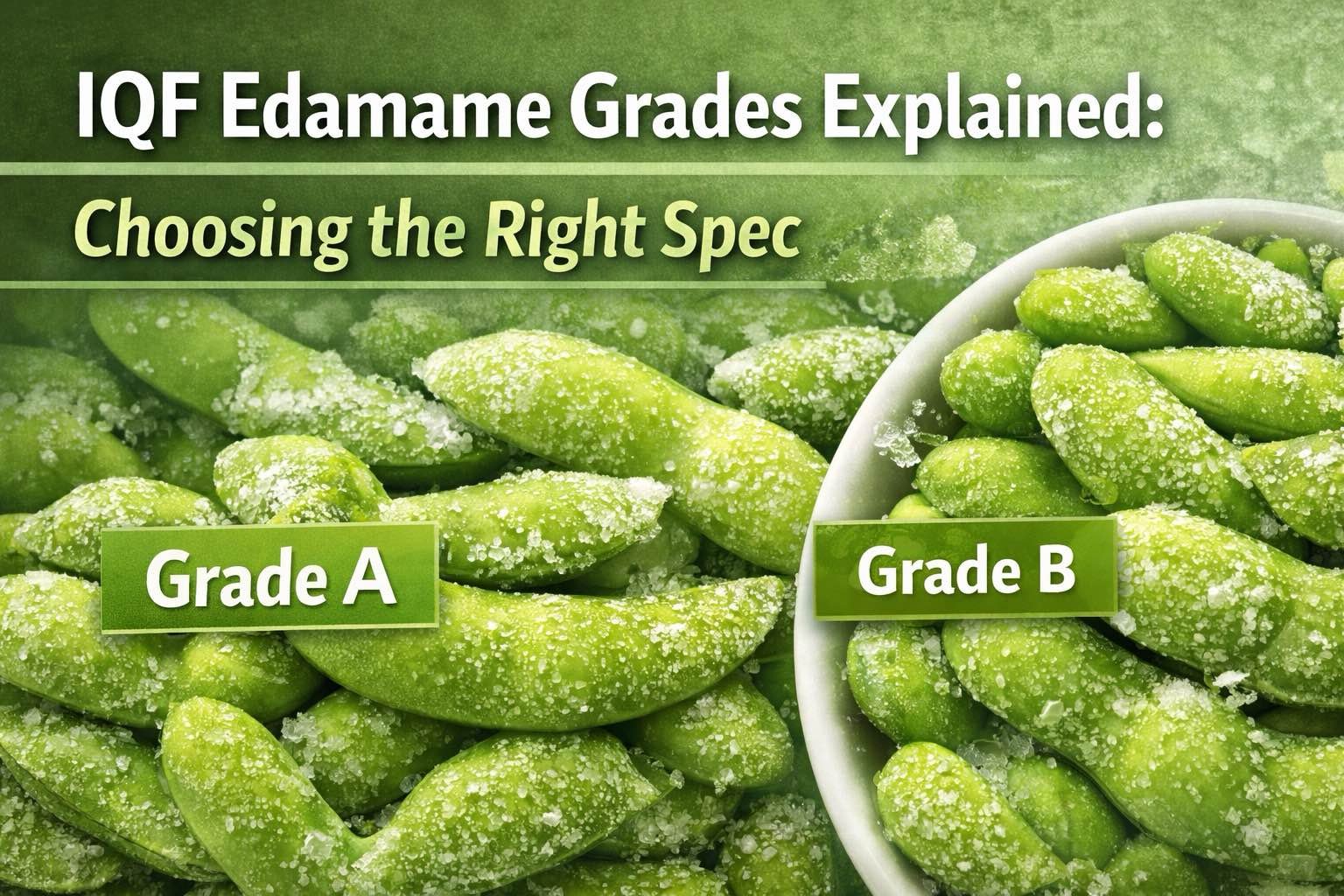

Not all IQF edamame is the same. Two products can both be labeled “frozen edamame,” yet perform very differently in taste, appearance, and cooking behavior. For buyers, grading and specifications are essential tools to protect consistency.
Key dimensions of IQF edamame grading include:
1) Size and Kernel Fill
Larger pods often indicate better kernel fill, but size alone is not enough. Buyers should define acceptable ranges and measure fill rate and uniformity.
2) Color Standard
Premium edamame should look green and vibrant. Color depends on raw maturity, blanching parameters, and frozen chain integrity. Specify color expectations and acceptable variation.
3) Texture After Cooking
Texture is influenced by maturity and blanching. Over-mature pods can be tougher; under-processed batches may taste raw. Ask for cooking tests that match your end-use.
4) Defect Limits
Common defects include broken pods, stems, foreign matter, and discoloration. Define defect tolerances and sampling methods.
5) Packaging and Glazing
Some customers want minimal glazing; others prioritize dehydration protection. Be explicit about glazing percentage range and packaging material.
If you share your target channel (retail, foodservice, or private label), you can select a spec that optimizes both eating quality and cost—without surprises after launch.