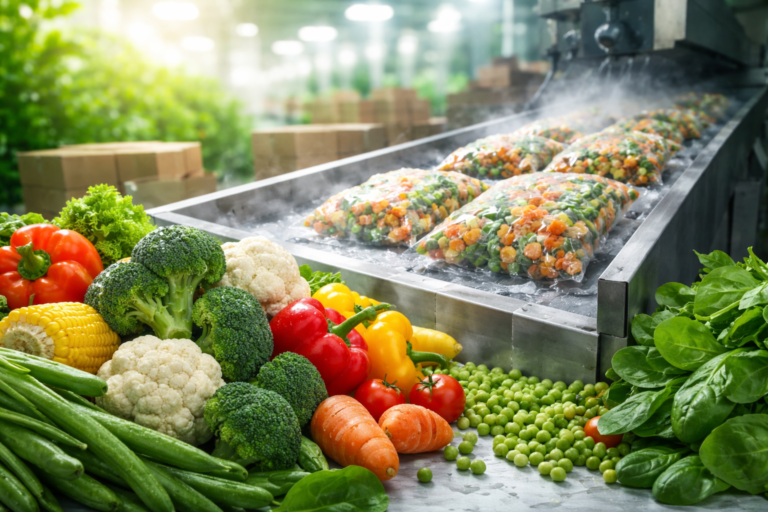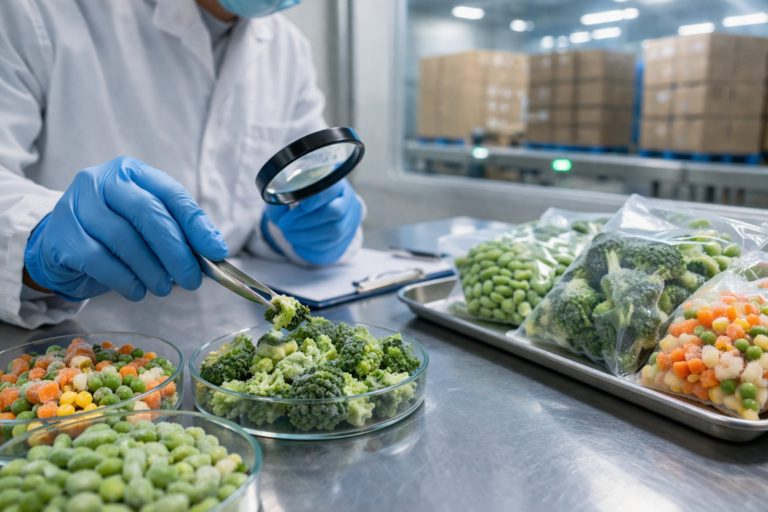
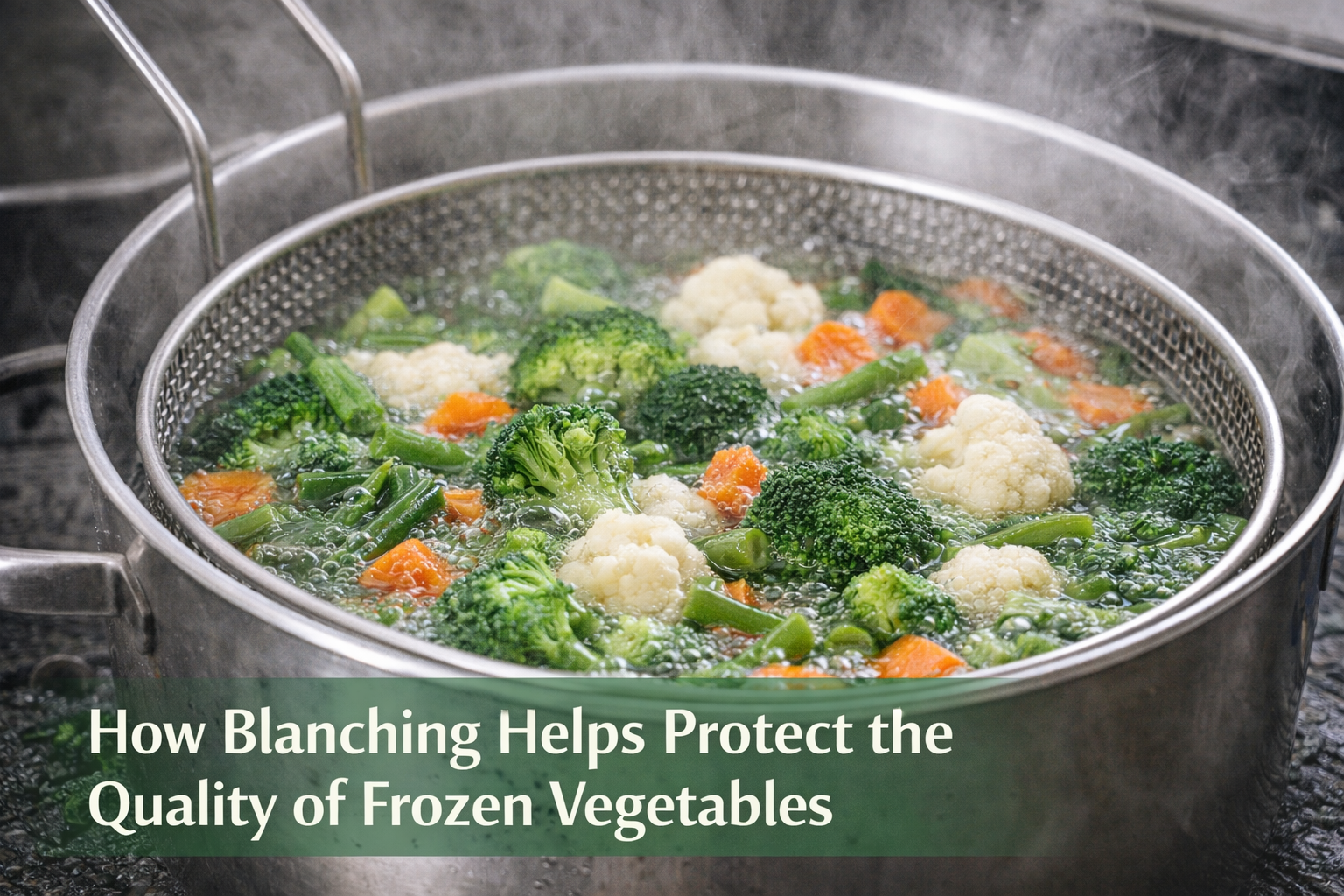

In the frozen vegetable industry, product quality is not determined by freezing alone. Before vegetables enter the IQF process, one of the most important steps is blanching. This short heat treatment may look simple, but it plays a major role in helping frozen vegetables maintain their color, texture, flavor, and overall shelf-life stability.
Blanching is commonly used before freezing vegetables such as broccoli, cauliflower, spinach, green beans, and carrots. The main purpose is to reduce enzyme activity inside the vegetable. If these natural enzymes remain too active during frozen storage, they can gradually damage the product over time. This may lead to color fading, off-flavors, texture deterioration, or reduced visual appeal after cooking. For buyers, that means a product may still be frozen safely, but no longer perform well in the market.
When blanching is done correctly, it helps vegetables keep a cleaner appearance and more consistent eating quality. Green vegetables can better retain a vibrant natural color. Products with delicate structures can also benefit from more stable texture after thawing or cooking. This matters especially for importers, wholesalers, and foodservice buyers who need products to look attractive and cook predictably in every batch.
However, blanching is not simply a matter of applying heat. Time and temperature must be carefully controlled according to the type, size, and structure of each vegetable. Under-blanching may leave too much enzyme activity, which can shorten storage quality and create inconsistency in the final product. Over-blanching can also create problems by softening the vegetable too much, reducing firmness, or affecting natural flavor. In other words, good blanching is about balance, not just process completion.
For professional buyers, understanding blanching is useful when evaluating a supplier. Two samples may look similar when frozen, but they can perform very differently after cooking. A properly blanched product is more likely to deliver stable color, better bite, and more reliable plate performance. This is particularly important in retail packs, meal manufacturing, and restaurant applications where appearance directly affects customer perception.
Blanching also supports better efficiency in downstream use. Products that have gone through a well-managed pre-treatment process are often easier to handle in cooking, reheating, or recipe assembly. This gives buyers more confidence when they build long-term sourcing programs around frozen vegetables.
As the frozen vegetable market becomes more quality-driven, buyers are paying closer attention to what happens before freezing, not only after it. Blanching is one of those critical details that often stays behind the scenes, yet strongly influences the final result. For suppliers that want to deliver dependable quality and for buyers who want fewer claims and more consistent performance, blanching remains a key part of a strong frozen vegetable processing system.