
oother sourcing and delivery planning.
Primary Keyword: frozen vegetable specifications
Secondary Keywords: IQF frozen vegetables, frozen vegetable supplier, frozen vegetable quality standards, specification alignment, IQF vegetable sourcing
Slug: /understanding-specification-alignment-in-frozen-vegetable-purchasing/
Understanding Specification Alignment in Frozen Vegetable Purchasing
In frozen vegetable trade, many supply problems do not begin during production or shipment. They begin much earlier, at the specification stage.
For importers, distributors, retailers, and foodservice buyers, a product may appear acceptable on paper but still create problems later in the supply chain. Differences in floret size, cut style, moisture expectations, defect tolerance, or packaging details can lead to complaints, rework, delayed approvals, or unexpected losses.
When product requirements are clearly aligned before production starts, frozen vegetable purchasing becomes more predictable, more efficient, and easier to manage over time.
Specifications Do More Than Describe the Product
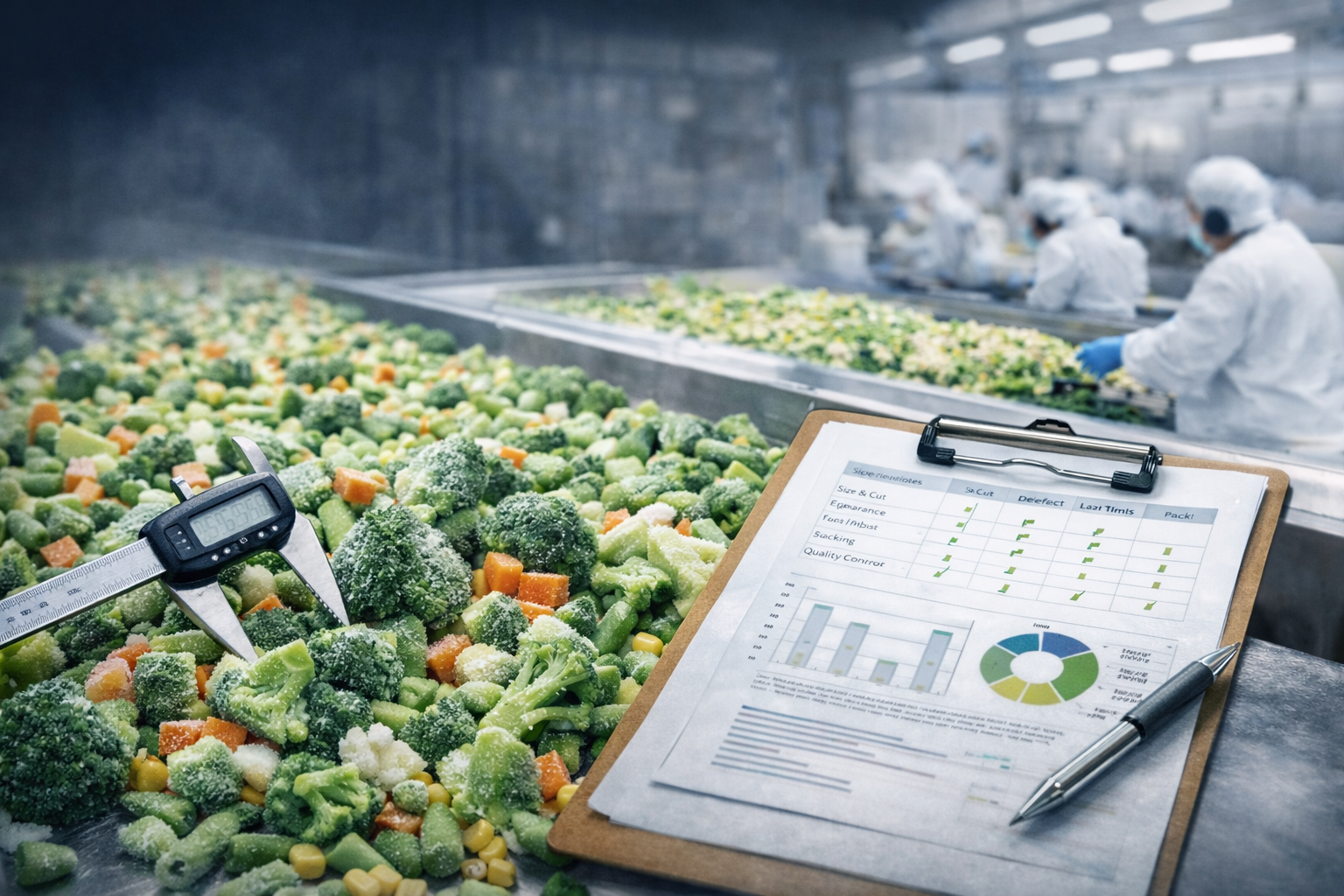
Some buyers treat product specifications as a simple checklist. In practice, they are much more than that. A good specification serves as a control standard for both buyer and supplier.
It does not only describe what the product is. It also defines what acceptable supply looks like in practical terms. This often includes:
- product variety and origin
- cut size or shape
- color and appearance expectations
- defect tolerance
- moisture and foreign material limits
- packaging format and net weight
- labeling requirements
- temperature and cold-chain expectations
- documentation and compliance needs
When these details are clarified early, both sides are working from the same standard. This reduces misunderstanding and makes quality performance easier to assess.
Misalignment Can Create Commercial Risk
In many frozen vegetable programs, the biggest problem is not complete supplier failure. More often, the issue is that the delivered product meets one standard, but not the buyer’s actual application needs.
For example, broccoli florets intended for retail packing may require a different size range than broccoli supplied for foodservice or ready meal production. Mixed vegetables for one market may need a different vegetable ratio than products intended for another. Even carton markings or bag dimensions can become a problem if they do not fit warehouse systems or shelf requirements.
Without clear alignment in advance, problems usually appear in several common forms.
1. Quality complaints after arrival
A shipment may be generally acceptable by industry norms, but still fall short of the buyer’s internal specification.
2. Production inefficiency
When the product is used in downstream processing, inconsistency in size or performance can slow production lines, increase waste, or affect the final product result.
3. Approval delays
If the sample, specification sheet, and actual cargo are not closely matched, buyers may need extra internal review before confirming repeat orders.
4. Disputes that affect long-term cooperation
Many claims are not caused by poor intent. They are often the result of unclear standards, vague wording, or assumptions made on both sides.
Specification Alignment Improves Sample Evaluation
Sample approval is one of the most important steps in frozen vegetable sourcing. However, a sample only creates real value when it is reviewed against a clear and agreed specification.
Without that reference point, a sample can create false confidence. It may look acceptable visually while leaving key questions unresolved:
- Is the size range suitable for the target sales channel?
- Does the cooking performance match the intended application?
- Is the defect level realistic for regular production?
- Does the packing format reflect the actual shipment plan?
A clear specification allows buyers to evaluate samples more objectively. It also helps suppliers provide samples that reflect normal production standards rather than one-time presentation material.
Different Sales Channels Require Different Standards
Frozen vegetable requirements can vary significantly depending on the sales channel.
Venta al Por Menor
Retail buyers often focus on appearance, bag presentation, labeling, and consistent consumer-facing quality. Small differences in size, color, or bag fill can influence shelf appeal and brand image.
Servicio de Alimentación
Foodservice buyers typically place more emphasis on kitchen performance, convenience, portion control, and reliable case packing. Product consistency matters because it directly affects labor efficiency and menu execution.
Industrial and ready meal production
For processors and manufacturers, performance during cooking, mixing, or line processing may be more important than visual appearance alone. Size uniformity, clumping control, and line compatibility become essential.
The same vegetable category may therefore need different specifications depending on how it will be used. A reliable frozen vegetable supplier should be able to identify and clarify these differences before production begins.
Clear Specifications Support Long-Term Supply Consistency
Specification alignment is valuable not only for first orders, but also for repeat business.
As supply programs grow, production may involve multiple runs across different harvest periods or shipment schedules. A clear specification creates continuity across these orders and helps reduce variation from batch to batch.
This is especially important for buyers managing:
- long-term supply agreements
- private label programs
- multi-market distribution
- foodservice menu consistency
- seasonal replenishment planning
In these situations, steady performance is often more important than short-term price differences.
What Buyers Should Clarify Before Production
To reduce avoidable risk, buyers should confirm key specification points before production starts.
Product definition
Confirm the exact item, variety, cut style, and intended end use.
Size and tolerance
Define the required size range, acceptable variation, and any grading expectations that matter for the order.
Appearance standards
Clarify color expectations, visual defects, foreign material limits, and the overall acceptable quality level.
Packing requirements
Confirm bag size, carton weight, pallet pattern, labeling details, and whether the product will be shipped in bulk or retail-ready format.
Documentation
Check which export documents, certificates, and compliance records are required for the destination market.
Approval reference
Ensure that the approved sample, technical specification, and commercial order details all match.
Once these points are aligned clearly, production planning becomes smoother and post-shipment issues become less likely.
Better Communication Starts With Better Specifications
Strong supplier relationships are not built on price alone. They depend on clarity, execution, and consistency.
A supplier cannot deliver reliably against an undefined target. In the same way, a buyer cannot accurately judge performance without a clear baseline. Specification alignment provides that baseline for both sides.
For frozen vegetable buyers, this means fewer misunderstandings, faster order confirmation, more stable quality expectations, and stronger control over long-term supply performance.
Final Thought
Successful frozen vegetable purchasing is rarely based on luck. In most cases, it comes from careful preparation and clear communication.
Well-defined specifications help buyers reduce disputes, evaluate samples more effectively, and build supply programs that are easier to manage over time. Whether the product is intended for retail, foodservice, or industrial use, clearly aligned expectations support better results for both buyer and supplier.
For companies sourcing IQF frozen vegetables, specification alignment before production can improve consistency, reduce commercial risk, and support smoother cooperation from sample approval to final shipment.
Looking for a more reliable IQF frozen vegetable supply program? Share your target product, packaging format, and destination market, and our team can help review your key specifications before production begins.