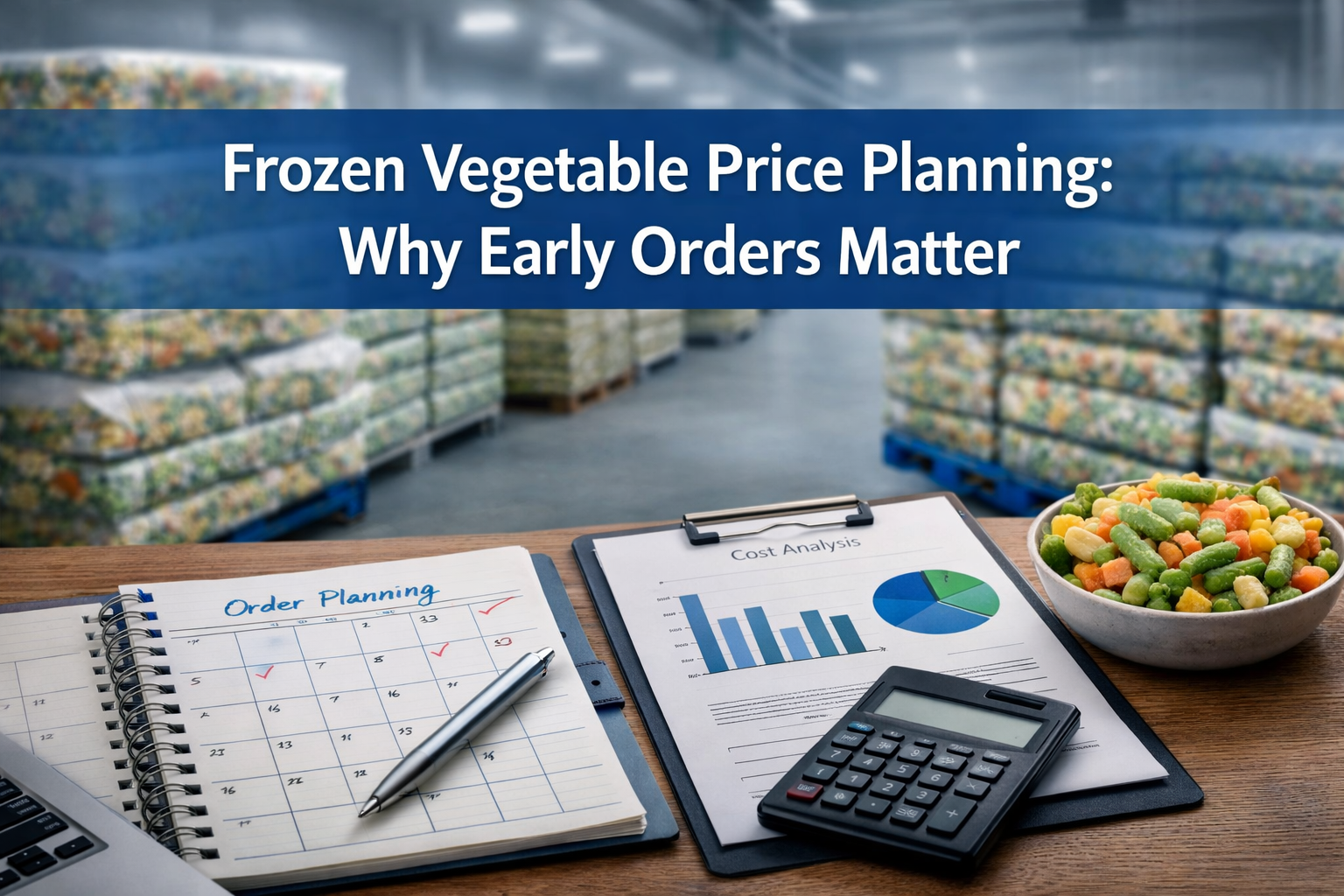

In today’s global food supply chain, buyers are paying closer attention to cost stability than ever before. For frozen vegetable importers, distributors, and private label buyers, price is not only influenced by raw materials. It is also affected by freight conditions, cold chain operations, packaging inputs, and general market volatility.
When energy and logistics costs become less predictable, delayed purchasing decisions can create unnecessary pressure. A later order may face tighter production windows, less packaging flexibility, or a higher risk of cost adjustment. That is why many professional buyers now focus more on early planning rather than waiting for the market to become clearer.
Early order planning does not mean rushing into procurement without evaluation. It means confirming key requirements earlier: product specification, packaging format, target shipment window, and documentation needs for the destination market. Once these elements are aligned in advance, suppliers are usually in a better position to arrange raw materials, reserve production capacity, and manage shipment schedules more efficiently.
For frozen vegetable programs, this matters especially when buyers are working with seasonal demand, promotional launches, or retail delivery deadlines. Even if market prices do not change dramatically in a short period, the ability to secure a practical production slot can already create value. Stable execution is often just as important as the quoted price itself.
From a supplier perspective, earlier communication also improves coordination. It reduces the chance of last-minute specification changes, helps packaging preparation move more smoothly, and supports a more realistic lead time commitment. For buyers, this can mean better visibility and fewer unexpected issues during peak periods.
In a changing market, the goal is not to create panic. The goal is to improve planning quality. Buyers who prepare earlier are often better positioned to protect both supply continuity and commercial efficiency.
If you are sourcing IQF frozen vegetables for retail, foodservice, or industrial use, discussing your requirements early can help you build a more stable and workable supply plan.